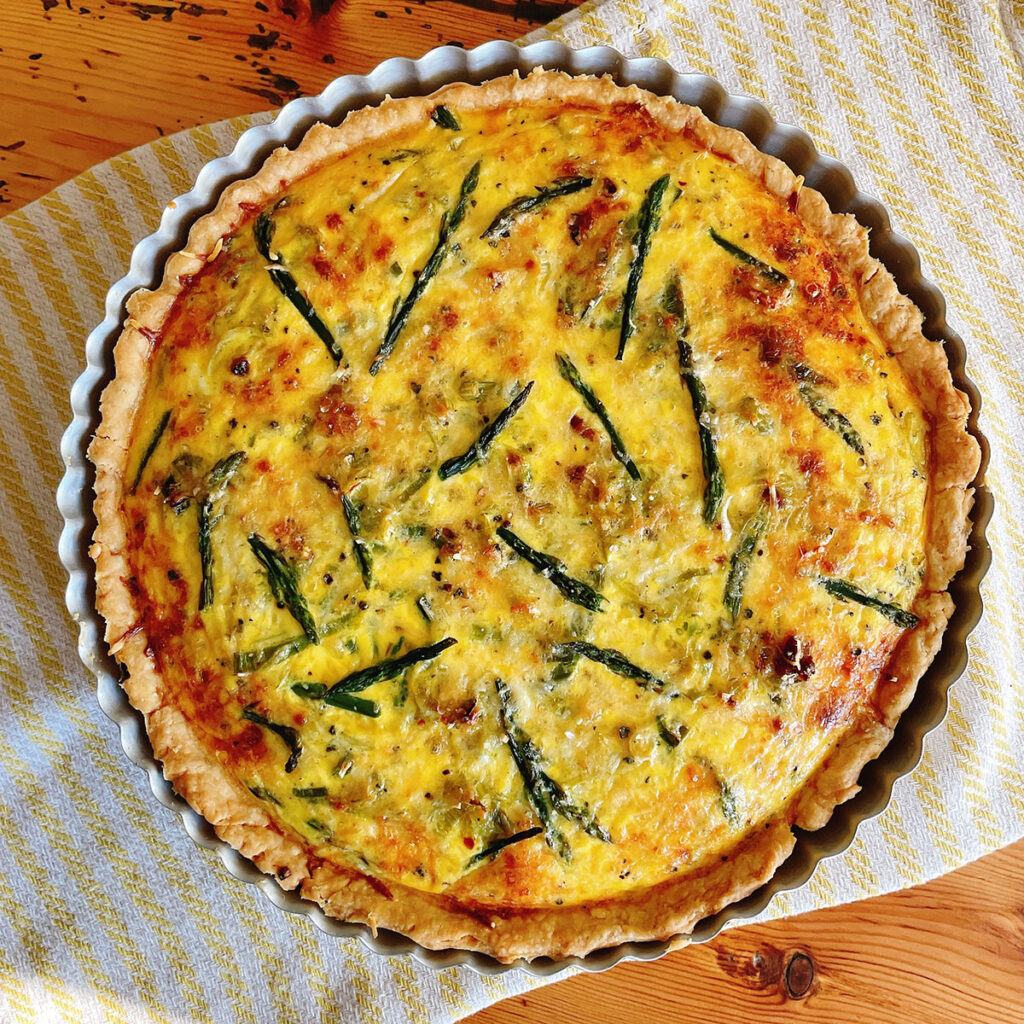
Making a quiche is a labour of love. But I believe it is worth the effort for the outcome. I love quiche, but it was only recently that I started making them myself, as it was always something I would order at a cafe or specialty food market.
The first time I attempted to make quiche was almost a complete disaster. I had decided to use a store-bought frozen puff pastry for the crust instead of regular pie dough – because that sounded more flaky and delicious and because I already had one in my freezer. But when par-baking the crust, I forgot to weigh it down with pie weights! So the center puffed up huge, causing the sides to slip half-way down the sides of the pan. An emergency attempt to add the leftover scraps of dough to the edges of the pan was quickly foiled by temperature – because trying to mold puff pastry onto a hot pan basically just turns your dough into goop. I said, “whatever, the filling can just come up past the crust in the pan – it’ll be fine.” Then duly forgot, as I poured the custard into my shabby crust, that I was using a false-bottomed tart pan! As egg and cream went up and over the crust and rather quickly began leaking out the bottom – thankfully onto a rimmed baking sheet and not all over my counter – I then said, “Oh shit!”
In a flurry of panic, I quickly picked up my, now liquid-less, tart crust and set it on another baking sheet, calculating my options at this point. Abort mission? No. I was determined to save this. Since the pan was already hot from baking the crust, some of the egg had started to cook and stick where it had come in contact with the metal. I figured if I poured the egg mixture from my baking sheet back into the tart crust and quickly stuck it in the oven, any egg trying to leak out would immediately cook on the hot metal, solidify and seal all the gaps, preventing any further leakage from the yet uncooked parts. Why not? There was nothing to loose at this point.
And guess what? It worked!
When it finally came out of the oven, you could hardly tell what it had been through. A little rough around the edges so to speak, but it ended up being absolutely delicious! What can I say – I like my crust deformed. The moral of this story is that sometimes you have failures in the kitchen … and sometimes those failures still turn into enormous successes, or at the very least some lessons learned.
Lesson #1: If you are using traditional pastry for your crust, and especially if you are using puff pastry, ALWAYS weigh it down with pie weights. Press your crust into your pan, line it with parchment paper, and fill to the top with the weights. You can use ceramic pie weights or dried beans or rice – I use an old bag of dried chickpeas that I’ve baked more times than I can remember. Weights are not necessary when using a keto almond flour based crust, as it will not puff as much as traditional pastry will; simply pricking the base with a fork all over it usually sufficient.
Lesson #2: Let your crust cool completely before filling it. I recommend making the crust the day before and having it ready to go the next day. This is also cuts down on your morning prep and cooking time if you are making it for a weekend brunch.
Lesson #3: ALWAYS set your pan on a baking sheet before filling it. Even with a perfectly formed crust, there’s always a chance some liquid will leak out, and you don’t want to make a mess of your counter, or worse, your oven. It’s also much easier to transfer to the oven on the sheet.
Lesson #4: Don’t give up! Pastry and custard can both be notoriously temperamental, but with a little practice and a lot of patience, one eventually finds the system that works for them.
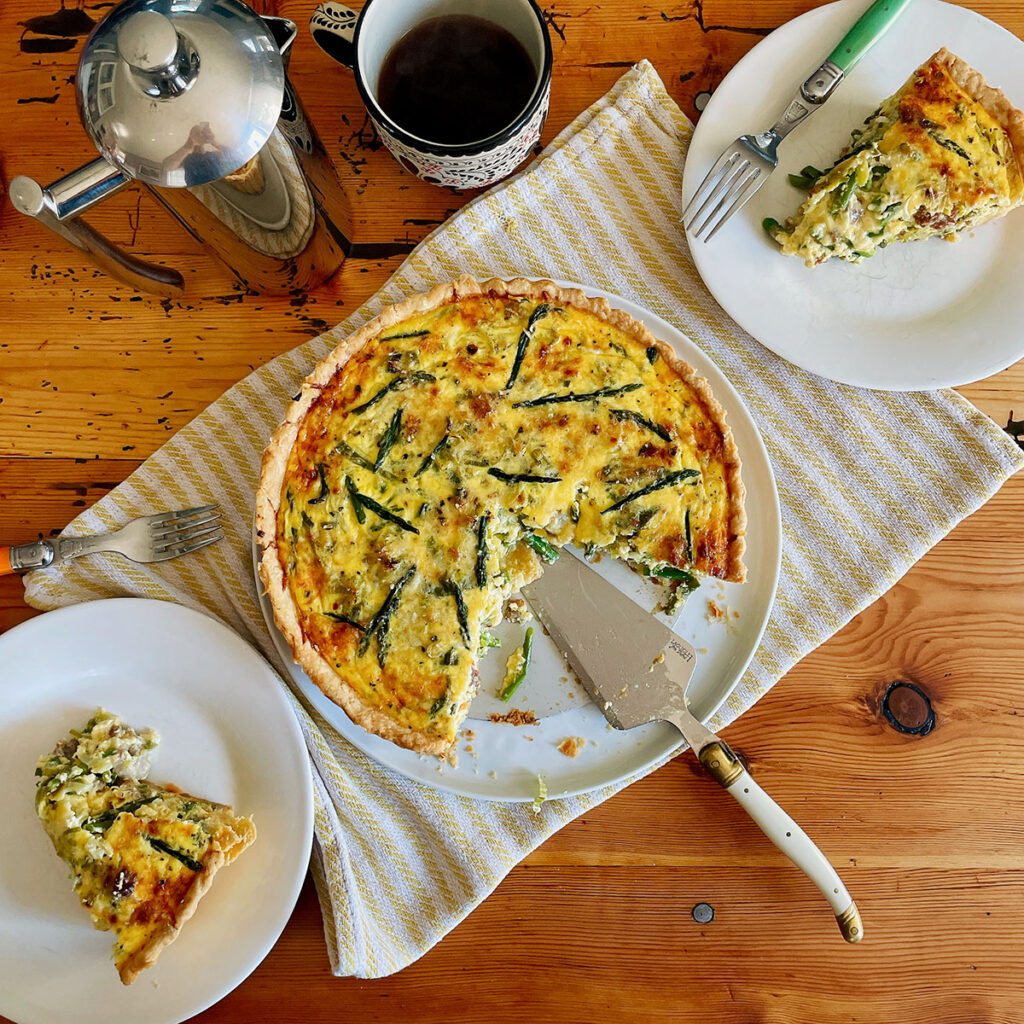
For me, that system has become pretty standardized when it comes to quiche, which allows me to experiment with many different varieties and flavors while reliably getting consistent outcomes. I use more or less the same custard base and proportions for each one, always a mix of eggs, crème fraîche, and heavy cream and always in a 2-inch deep fluted tart pan. I have two go-to crusts: one a traditional pâte brisée pie pastry and the other a keto almond and coconut flour based dough. The recipe below references both at the par-baking stage, depending on which one you would like to make. I always make the crust the night before, then store in the fridge until ready to use the next day.
For this particular springtime quiche, if you can’t find green garlic, just substitute one more leek. Green garlic is basically young garlic, when the stalks are green and tender and it has not grown a bulb yet. They look like thin leeks or thick green onions. I have only ever been able to find them at my local farmer’s market. The Italian sausage can be either mild or spicy, depending on your preference. And last but very much not least, don’t skimp on the cheese; it makes all the difference.
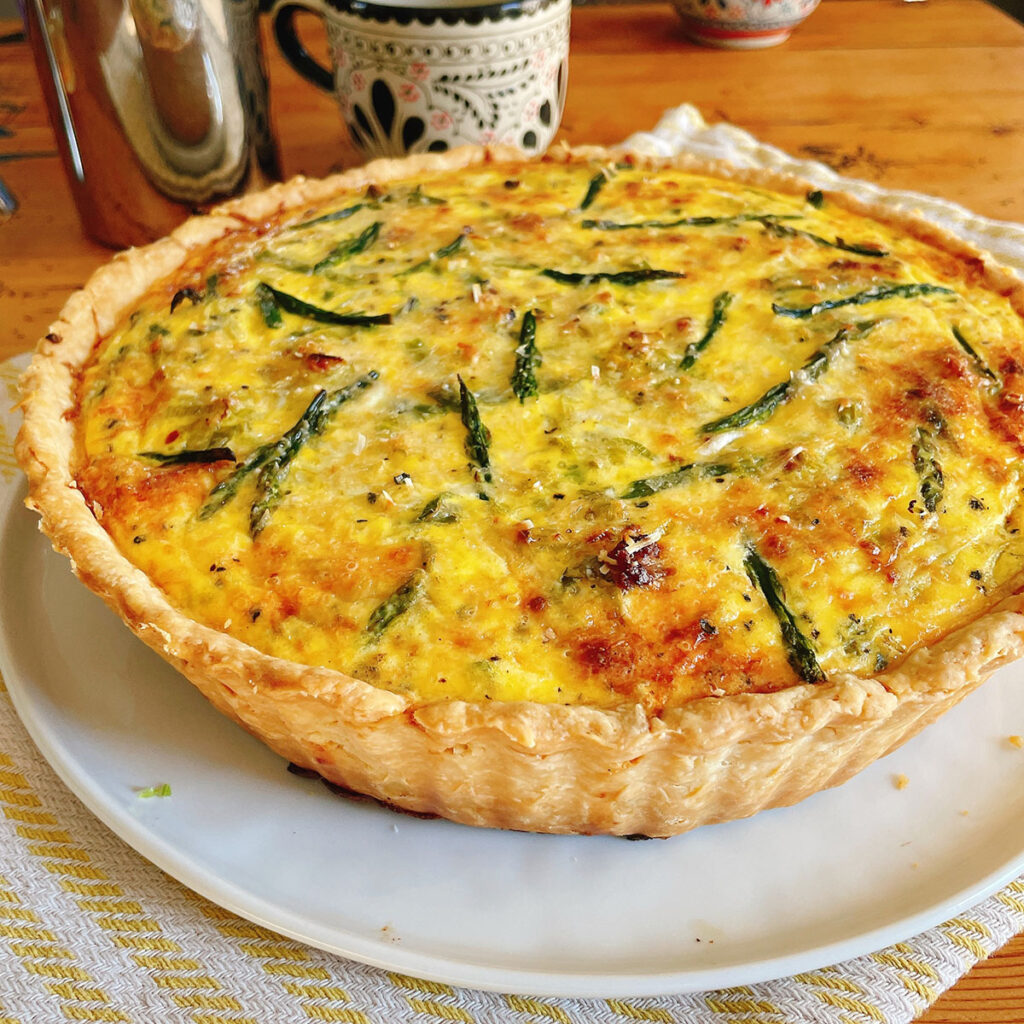
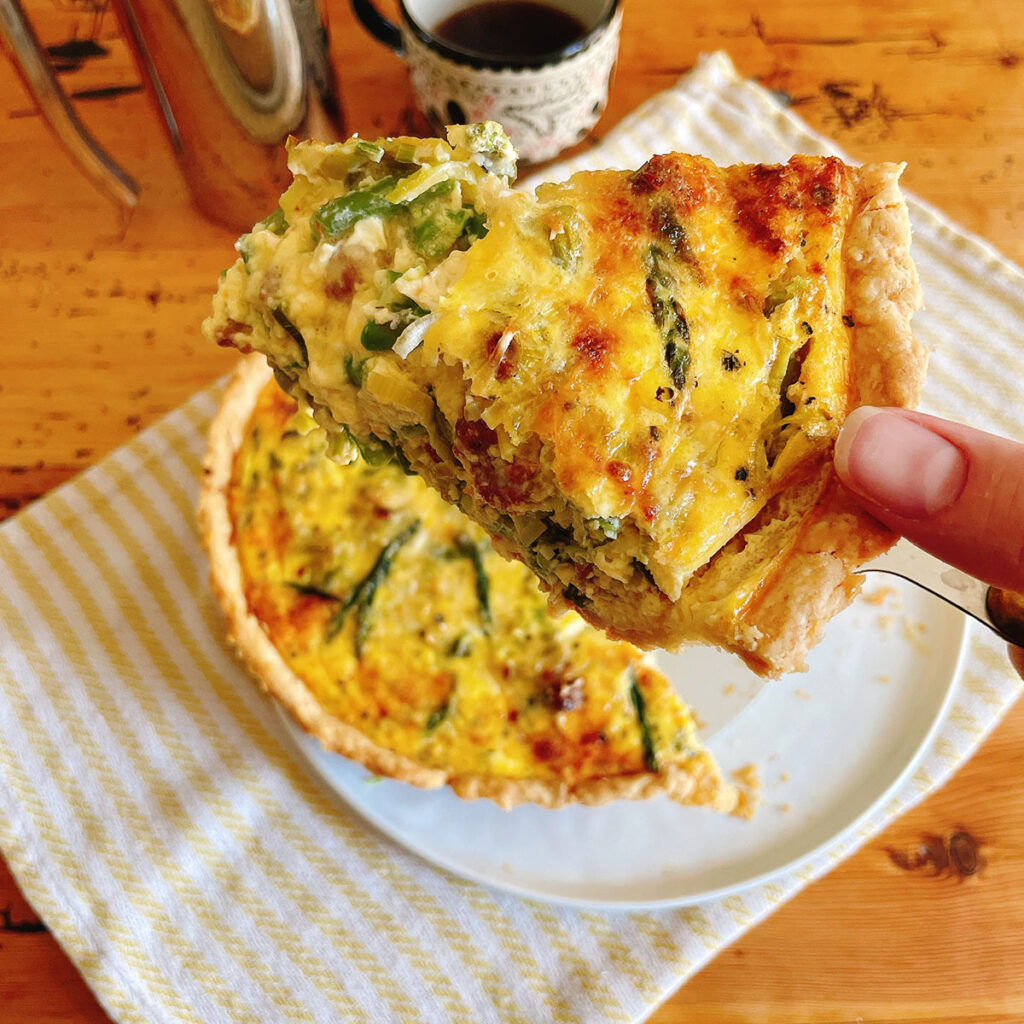
This asparagus, Italian sausage, and green garlic quiche truly is delicious, and it even gets better with time and reheats well. Eating it for lunch throughout the week after making it for Sunday brunch, I kept finding myself thinking, “Wow, this quiche is so good. It’s even better than it was yesterday!” The flavors just continue to meld and infuse the custard. Reheating is best in a 350°F oven for about 5 to 10 minutes, but in a pinch, the microwave works well too, though the crust might not be as crispy.
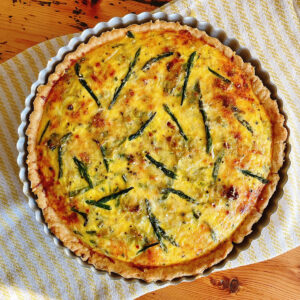
Asparagus, Italian Sausage, and Green Garlic Quiche
Ingredients
- 1 (1) savory pie crust (keto or regular)
- 3/4 lb (340 g) asparagus, woody ends trimmed
- 1 Tbsp (1 Tbsp) olive oil
- 3/4 lb (340 g) mild or spicy ground Italian sausage
- 1 (1 ) large leek (about 2 oz), thinly sliced
- 2 (2) stalks green garlic (about 1.5 oz), thinly sliced
- 1/2 tsp (0.5 tsp) salt
- freshly ground black pepper
- 1/4 tsp (0.3 tsp) red pepper flakes
- 1/2 tsp (0.5 tsp) dried oregano or thyme
- 6 (6 ) large eggs
- 1 cup (236 ml) heavy cream
- 1 cup (236 g) crème fraîche
- 2.5 oz (70 g) finely shredded parmesan
- 6 oz (170 g) coarsely shredded gruyere
Instructions
For the Tart Crust:
- Make the pie dough according to the instructions of your chosen recipe. Whether it's keto or regular, chill for at least an hour in the fridge. Cold pastry always behaves better than warm pastry.
- For a keto pie crust: Preheat the oven to 350°F. Divide the dough in two. Working in pieces, press half into the bottom of a false-bottomed fluted 2-inch deep tart/quiche pan; press the other half up and around the sides. Chill for at least 15 minutes (preferably closer to an hour). Prick the based all over with a fork. Par bake for 15 minutes until just started to turn golden and the crust is dry and firm.
- For a regular pie crust: Preheat the oven to 400°F. Roll out the dough until it is about a 1/8 inch thick. Gently lift the dough and lay it over the tart pan, pressing it down and into the fluted edges. Trim the edges if necessary. Chill for at least 15 minutes (preferably closer to an hour). Line with parchment paper and fill with pie weights. Par bake for 25 minutes until just started to turn golden and the crust is dry and firm.
- Set aside to cool while you prepare the rest of the quiche.
For the Custard:
- Preheat the oven to 375°F.
- Fill a large sauté pan or pot with water and bring to a boil. Blanch the asparagus for 2-3 minutes, until tender and bright green but still retaining a bite. Drain and rinse with very cold water. When cool, slice on the diagonal into 1 inch pieces.
- Heat a Tbsp of olive oil in the same pan or pot over medium heat. Sauté the Italian sausage, breaking it up into small pieces, until well browned and cooked through. Remove with a spatula or slotted spoon and set aside, leaving the rendered fat in the pan (if you feel it is too much oil, you can pour some of it off).
- Add the leeks and green garlic to the pan over medium heat. Sauté until soft and fragrant, about 5 minutes. Add a pinch of salt, some black pepper, the red pepper flakes, and the oregano or thyme. Continue to cook for 1-2 more minutes. Turn off the heat.
- Whisk the eggs, heavy cream, and crème fraîche until smooth. Season with sea salt and freshly ground black pepper.
- Take your par-barked crust in its tart pan and place it on a rimmed baking sheet. This is important! In case there are any leaks (false-bottom, remember), it won't make a mess of your oven.
- Layer the ingredients in the quiche: spread half the parmesan over the base of the crust, followed by 1/3 of the gruyere, half the sausage, half the asparagus, and half the leek mixture. Layer another 1/3 of the gruyere, followed by the remaining sausage, asparagus, and leeks. Top with the last 1/3 of gruyere. Pour the egg and cream mixture evenly over the ingredients. It should fill up the entire pan, up to about a 1/8 to 1/4 inch below the top of the crust. Finally sprinkle the remaining half of the parmesan over the top of the custard.
- Bake at 375°F for 50-60 minutes until the custard is set and the top is a light golden color. Let cool at least 15 minutes to finish setting. The crust should pull away from the sides of the pan slightly.
- If using a false-bottomed pan: Loosen the quiche crust from the edges of the pan with a butter knife, going around the whole edge. Have a large plate or platter (or whatever you want to put the quiche on) at the ready nearby. Remove the fluted ring of the pan from the base. There are a couple ways to do this successfully. Please see the blog post for the instructions.
- Slice into wedges and serve warm.
Notes and Tips
Nutrition