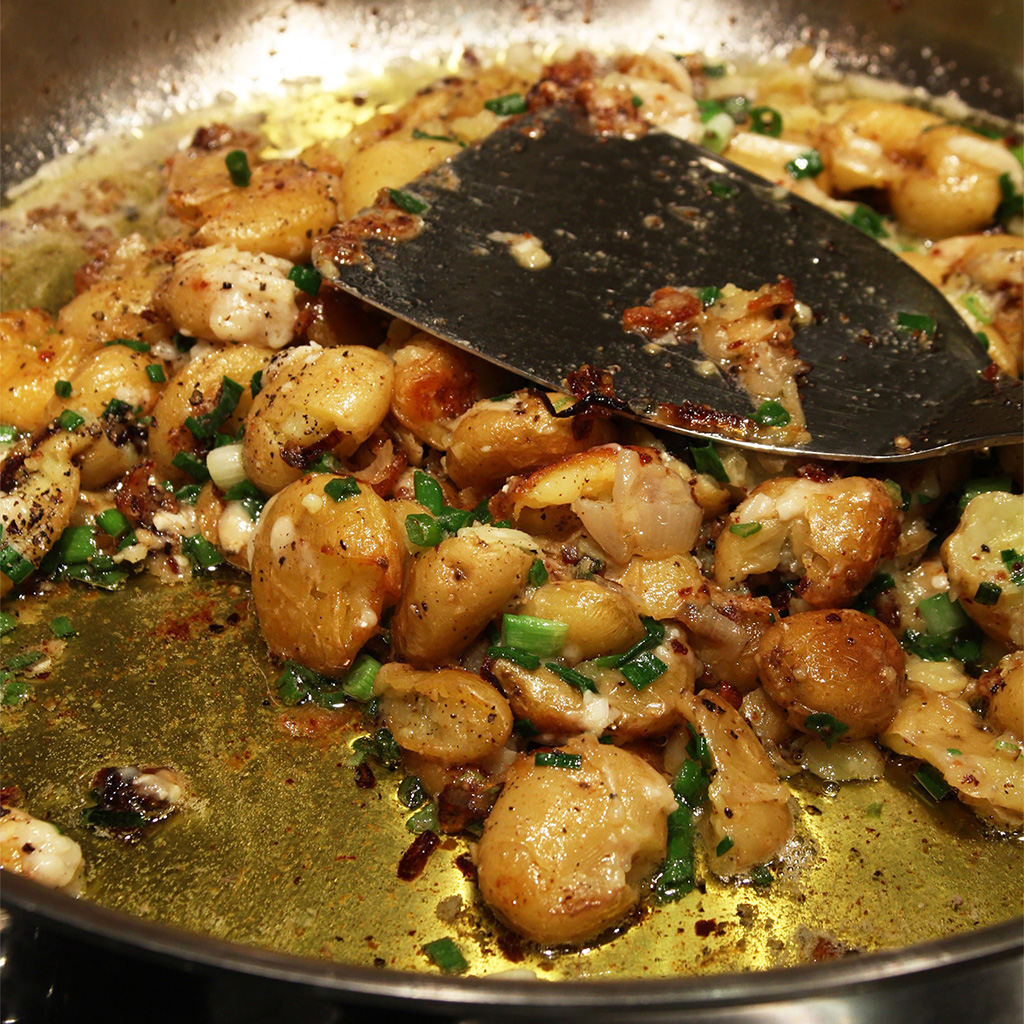
Daylesford Farm Smashed Potatoes
We first learned to make these smashed potatoes at the Daylesford cookery school in Gloucestershire, England on our trip to the Cotswolds. They sit in a pile in hot oil until they become crispy, with a mouth-watering texture somewhere between fried and baked. The cheese and scallions bring the whole dish together. Sometimes it can be difficult to flip them all as a single unit while cooking, as described in the instructions, but with practice it becomes quite easy to master this recipe. This is a great side for a steak or beef tenderloin.
Share Recipe
Servings: 4 people
Calories: 375 kcal
Net Carbs: 21 g
Ingredients
- 4 Tbsp (4 Tbsp) olive oil
- 4 Tbsp (4 Tbsp) butter
- 2 (2) shallots, chopped
- 1 lb (455 g) small boiler or new potatoes
- 1/2 cup (50 g) asiago cheese, finely grated
- 6 (6) green onions, thinly sliced
- salt and freshly ground black pepper, to taste
Instructions
- In 5 minute increments, microwave the potatoes in a microwavable bowl or casserole dish until soft, about 10-15 minutes total. When soft enough, smash each potato gently with a fork.
- Heat the olive oil and butter in a large skillet over medium-high heat. Sauté the shallots until soft, then add the smashed potatoes.
- Leave the potatoes in a relatively flat pile in the center of the skillet and let them brown, about 5-10 minutes. Once they start to get crispy, try to turn them over as one unit with a spatula. If they fall apart a little, that's okay, but try to keep them smashed together. Let the other side brown and crisp up.
- Sprinkle the 1/2 cup of asiago cheese over the potatoes, along with the thinly sliced green onions. Allow to melt and bind the potatoes together.
- Salt and pepper to taste and serve hot.
Nutrition
Calories: 375kcalFat: 29gSodium: 344mgNet Carbs: 21gSaturated Fat: 6gPotassium: 580mgCarbohydrates: 24gVitamin A: 778IUFiber: 3gVitamin C: 27mgSugar: 2gCalcium: 183mgProtein: 8gCholesterol: 9mgIron: 1mg